
Are you tired of planning your day around your bathroom schedule?
If you are, you are not alone, and this April, during IBS Awareness Month 2026, it is time we talk about it openly.
Irritable Bowel Syndrome, or IBS, is one of the most common digestive disorders in the United States today. Yet millions of Americans are still suffering in silence, assuming their symptoms are “just stress” or “normal stomach trouble.” They skip social events and worry before meetings. They quietly map every restroom in every building they enter.
This is not normal. And it is not something you have to live without answers for.
This blog is for every person who has Googled their symptoms at 2 AM, tried cutting out foods one by one with no real plan, or felt dismissed by doctors who could not find “anything wrong.”
We are going to break down what IBS actually is, what is happening in your gut (and brain), and what practical, evidence-based steps you can take right now to feel better.
Table of Contents
What Is IBS And Why Does It Still Go Undiagnosed?
Irritable Bowel Syndrome is a chronic functional gastrointestinal disorder. That means your gut is not structurally damaged, there is no visible wound, no tumor, no tear. But it is not functioning correctly either. The gut’s communication system is dysregulated, leading to very real and very uncomfortable symptoms.
The most common IBS symptoms include:
- Recurring abdominal pain at least one day per week
- Bloating and excess gas
- Diarrhea, constipation, or alternating between both
- Mucus in the stool
- A feeling of incomplete bowel emptying
What makes IBS especially frustrating is that it looks invisible from the outside, but it feels overwhelming from the inside. Because standard tests like colonoscopies or blood panels often come back “normal,” many patients are told there is nothing wrong. Some are told it is anxiety. Some are told to just eat more fiber.
Quick Fact: IBS accounts for up to 50% of all visits to gastroenterology clinics in the United States, making it the most common GI condition seen by digestive specialists.
The condition is officially recognized in the U.S. National Health Observances calendar, and the International Foundation for Gastrointestinal Disorders (IFFGD) has designated April as IBS Awareness Month since 1997, specifically to tackle this gap between suffering and diagnosis.
The three main types of IBS are:
- IBS-C — IBS with constipation (about one-third of all cases)
- IBS-D — IBS with diarrhea
- IBS-M — IBS with mixed bowel habits (alternating constipation and diarrhea)
Each type has different triggers and different management strategies. Knowing your type is the first step toward real relief.
How Common Is IBS? The Numbers May Surprise You
The scale of IBS in America is significant and growing.
- Approximately 45 million Americans are currently living with IBS.
- IBS affects 10–15% of the population worldwide, making it one of the most prevalent gastrointestinal conditions globally.
- Women are almost twice as likely to be diagnosed with IBS as men, pointing to a likely hormonal connection.
- The most common age of diagnosis is between 20 and 40 years old, affecting people during some of the most productive years of their lives.
- IBS results in workers being 30% less productive on average, corresponding to nearly 14 lost work hours per week.
Despite these numbers, a large portion of people with IBS remain undiagnosed and untreated, unaware that their daily symptoms have a medical name, a medical explanation, and real treatment options.
The IBS–Anxiety Connection: Breaking the Cycle
Here is something that often surprises people: up to 40% of people with IBS also experience anxiety, depression, or panic symptoms.
And the relationship goes both ways. Anxiety worsens IBS symptoms. IBS symptoms worsen anxiety. Left unaddressed, this cycle can take over a person’s entire life.
When you are stressed or anxious, your HPA axis releases cortisol. Cortisol travels to the gut, slows or speeds food through your digestive system, increases gut sensitivity, and can trigger IBS flare-ups. People with IBS then begin to worry about when the next flare will happen, which keeps cortisol elevated, which keeps triggering symptoms.
This is not a weakness. This is biology.
Tip for Breaking the Stress-IBS Cycle: Gut-directed hypnotherapy and Cognitive Behavioral Therapy (CBT) are two of the most evidence-backed non-drug treatments for IBS. Multiple clinical guidelines around the world now recommend them as part of standard IBS care, not as “alternative” options, but as front-line treatments. Ask your GI specialist if a referral makes sense for you.
Practical stress management strategies with proven gut benefit:
- Diaphragmatic (belly) breathing — activates the parasympathetic nervous system, calming the gut. Practice 5–10 minutes daily.
- Progressive muscle relaxation — reduces the body’s overall stress response
- Mindfulness-based stress reduction (MBSR) — shown in studies to reduce IBS symptom severity
- Regular low-intensity exercise improves gut motility and reduces anxiety simultaneously
The Low FODMAP Diet: What It Is, How It Works, and What to Expect
If you have IBS and have not heard of the low FODMAP diet, this IBS gut health tip may be the most useful thing you read today.
FODMAP stands for Fermentable Oligosaccharides, Disaccharides, Monosaccharides, and Polyols, a group of short-chain carbohydrates that are poorly absorbed in the small intestine. When these carbohydrates reach the colon, gut bacteria ferment them rapidly, producing gas and drawing water into the bowel. For people with a healthy gut, this is manageable. For people with IBS and a hypersensitive gut, it is painful and disruptive.
The National Institute of Diabetes and Digestive and Kidney Diseases (NIDDK), part of the National Institutes of Health, specifically recommends the low FODMAP diet as a dietary approach for IBS symptom management.
High FODMAP foods to reduce or avoid (common triggers):
- Onions, garlic, and leeks
- Apples, pears, mangoes, and watermelon
- Wheat-based bread, pasta, and cereals
- Milk, soft cheese, and ice cream
- Beans, lentils, and chickpeas
- Mushrooms, asparagus, and cauliflower
- Artificial sweeteners ending in “-ol” (sorbitol, xylitol, etc.)
Low FODMAP foods that are generally well-tolerated:
- Eggs, plain meat, and fish
- Lactose-free dairy and hard cheeses
- Oats, rice, and quinoa
- Bananas, blueberries, strawberries, and oranges
- Carrots, zucchini, cucumber, and bell peppers
- Canned lentils (rinsed well, in smaller amounts)
⚠️ Important: The low FODMAP diet has three phases — elimination (4–8 weeks), reintroduction (6–10 weeks), and personalization. Skipping the reintroduction phase is the most common mistake people make. The goal is NOT to avoid all FODMAPs forever; it is to identify your personal triggers. In the long term, overly restrictive FODMAP diets can reduce beneficial gut bacteria. Always work with a registered dietitian who specializes in GI health for the best results.
Fiber, Hydration, and Meal Timing: The Underrated Gut Health Basics
Beyond the FODMAP framework, three foundational IBS gut health tips directly affect IBS symptoms, and most people with IBS are getting at least one of them wrong.
1. Fiber: It’s Not One-Size-Fits-All
The Dietary Guidelines for Americans recommend 22–34 grams of fiber per day for adults. But for IBS, the type of fiber matters as much as the amount.
- Soluble fiber (oats, psyllium husk, flaxseed, carrots) — absorbs water, softens stool, and slows gut transit. Generally better tolerated in IBS and specifically helpful for IBS-C.
- Insoluble fiber (wheat bran, many raw vegetables, whole grain skins) — speeds up gut transit. Can worsen IBS-D or trigger cramping if added too quickly.
Practical tip: Add fiber gradually, no more than 2–3 grams per day to allow your gut to adjust without triggering bloating and gas. Sudden large increases in fiber are a very common cause of IBS flare-ups.
2. Hydration: More Than Just Water
Dehydration slows the bowel and worsens constipation. But for IBS, what you drink also matters. Carbonated beverages, alcohol, and high-caffeine drinks are all known IBS triggers for a majority of patients.
Hydration tips for IBS:
- Aim for 6–8 glasses of plain water daily
- Drink water between meals rather than during large meals (large fluid intake during meals can speed gut transit)
- Limit coffee to one cup per day if it triggers symptoms — caffeine stimulates gut motility rapidly
- Peppermint tea has antispasmodic properties and has been studied as a complementary option for IBS pain
3. Meal Timing and Eating Patterns
- Eating smaller, more frequent meals (5–6 small meals vs. 2–3 large ones) reduces the load on the digestive system at any one time
- Eating slowly and chewing thoroughly reduces the amount of air swallowed, which directly reduces bloating
- Eating at consistent times daily helps regulate the gut’s internal clock (the migrating motor complex), which controls between-meal bowel activity
Probiotics and the Gut Microbiome: What the Research Actually Says
The gut microbiome, the community of trillions of bacteria, viruses, and fungi living in your intestines, plays a significant role in IBS. Research consistently shows that many people with IBS have a different microbiome composition than people without IBS, a state called dysbiosis.
Probiotics (live beneficial bacteria) and prebiotics (fiber that feeds beneficial bacteria) are two interventions that aim to restore microbiome balance. Here is what the evidence actually supports:
What probiotics may help with in IBS:
- Reducing bloating and gas
- Improving stool consistency in IBS-D
- Reducing overall symptom severity scores in some patients
- Positive effects on mood and anxiety through the gut-brain axis
Tip: Fermented foods like plain yogurt (with live cultures), kefir, and miso can provide probiotic benefits through diet, but watch for high FODMAP ingredients (like added fruit or honey in yogurt).
When to See a GI Specialist And What to Expect
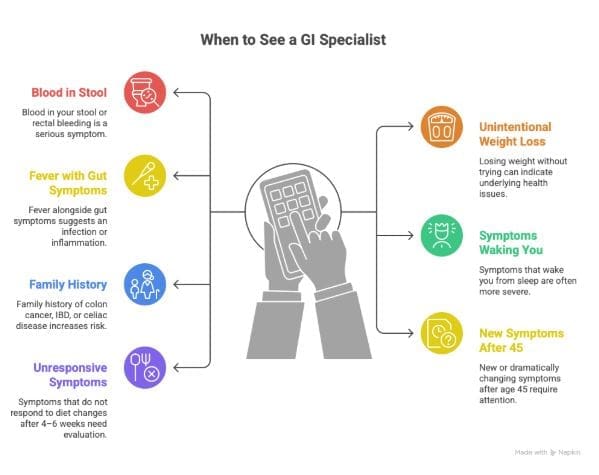
Many people manage mild IBS with diet changes alone. But certain symptoms mean you should see a board-certified gastroenterologist promptly, as they can overlap with more serious conditions like inflammatory bowel disease, celiac disease, or colorectal cancer.
What a GI specialist can do for you:
- Confirm an IBS diagnosis using the Rome IV diagnostic criteria (the current clinical gold standard)
- Rule out other conditions with targeted — not exhaustive — testing
- Create a personalized treatment plan covering diet, stress management, and medications when needed
- Discuss newer medications specifically approved for IBS subtypes (IBS-C and IBS-D each have targeted drug options)
- Refer you to a registered dietitian trained in GI nutrition
If you are 45 or older and have not had a colonoscopy, this month is the perfect time to schedule one. Colorectal cancer is the second-leading cancer killer in the United States, and screening at 45 is the standard recommendation. Your GI specialist can schedule and explain the procedure — it is more straightforward than most people expect.
Key Takeaways
- IBS is real, common, and treatable. It affects approximately 45 million Americans and is the most common condition seen by gastroenterology specialists.
- IBS is a Disorder of Gut-Brain Interaction — not “all in your head” and not purely a gut problem. Both the gut and the nervous system are involved.
- Up to 40% of IBS patients also have anxiety or depression, and managing stress is as important as managing diet.
- The low FODMAP diet has the strongest evidence for IBS, with up to 86% of patients reporting symptom improvement — but it must be followed in three phases under professional guidance.
- Soluble fiber, consistent hydration, smaller meals, and regular eating times are foundational habits that directly support gut health with IBS.
- Probiotics may help, but responses vary by individual and strain. Work with a specialist before starting.
- Certain red flag symptoms — blood in stool, weight loss, fever — require prompt GI evaluation, regardless of an existing IBS diagnosis.
- IBS Awareness Month 2026 is a reminder that you deserve answers, a proper diagnosis, and a real plan — not just reassurance that “nothing is wrong.”
Conclusion
IBS is not a life sentence of bathroom anxiety, food fear, and canceled plans. It is a complex but manageable condition, one that responds meaningfully to the right combination of dietary changes, stress management, gut microbiome support, and medical care.
This April, as part of IBS Awareness Month 2026, the most important thing you can do is take your gut health seriously. Stop dismissing your symptoms. Stop experimenting alone. Start with real information, real support, and a real specialist.
You have spent long enough managing this on your own. The right care can change how you feel every single day.
Frequently Asked Questions
1. Can IBS develop suddenly after a stomach infection or food poisoning?
Yes. This is called post-infectious IBS (PI-IBS), and it is more common than most people realize. After a gastrointestinal infection — whether bacterial, viral, or parasitic — some people develop persistent IBS symptoms that continue long after the infection itself has cleared. Research suggests that acute infections can alter the gut microbiome, increase intestinal permeability (sometimes called “leaky gut”), and trigger low-grade inflammation that leaves the gut hypersensitive. If your IBS started after a stomach illness, be sure to tell your gastroenterologist — PI-IBS has specific considerations for treatment.
2. Is IBS linked to a higher risk of developing other conditions like IBD or colon cancer?
IBS itself does not cause inflammatory bowel disease (IBD) or colorectal cancer, and having IBS does not directly increase your risk for either. However, because IBS symptoms like abdominal pain and altered bowel habits overlap with symptoms of IBD (Crohn’s disease, ulcerative colitis) and colon cancer, it is important not to assume every new or worsening symptom is “just IBS.” A gastroenterologist can perform targeted tests to rule these conditions out, and regular colorectal cancer screening starting at age 45 is recommended for all adults, regardless of IBS status.
3. Can children and teenagers have IBS?
Yes. IBS is not limited to adults. It can occur in children and adolescents, and symptoms may look different, including more frequent school absences due to abdominal pain, nausea before events, and significant food anxiety. The Rome IV criteria have specific diagnostic guidelines for pediatric IBS. If your child has frequent, unexplained stomach pain with changes in bowel habits, a pediatric gastroenterologist can provide evaluation and a structured management plan.
4. Does IBS affect sleep, and can poor sleep make IBS worse?
Yes, and this relationship goes in both directions. IBS frequently disrupts sleep — urgency, pain, and anxiety can all cause nighttime awakenings. At the same time, poor sleep directly worsens IBS symptoms. Sleep deprivation increases gut sensitivity, raises cortisol levels, and disrupts the gut microbiome’s circadian rhythm. Prioritizing consistent sleep of 7–9 hours per night is a legitimate and evidence-supported IBS management strategy.
5. Are there IBS-specific medications available, and when should they be considered?
Yes. While lifestyle and dietary changes are always the first-line approach, there are FDA-approved medications specifically for IBS subtypes when those approaches are not enough. The right medication, if needed, depends on your IBS subtype and overall health profile. This is a conversation to have with your gastroenterologist.
Are Your IBS Symptoms Controlling Your Life? It’s Time to Get Real Answers.
Living with constant bloating, unpredictable urgency, and daily discomfort is exhausting. You deserve a clear diagnosis, a practical plan, and a specialist who takes your symptoms seriously.
At Gastroenterology Associates, our board-certified gastroenterologists specialize in diagnosing and treating Irritable Bowel Syndrome for patients across Northern Virginia — with compassionate, evidence-based care that goes far beyond “try cutting out dairy.”
Whether you need a first evaluation, a colonoscopy, or a comprehensive IBS management plan, we are here.
Call us at 571-248-0653 or request an Appointment online at doctorgi.com serving Gainesville, Manassas, and Warrenton, Virginia. If you are 45 or older and have not scheduled your colonoscopy, this is the month to do it.