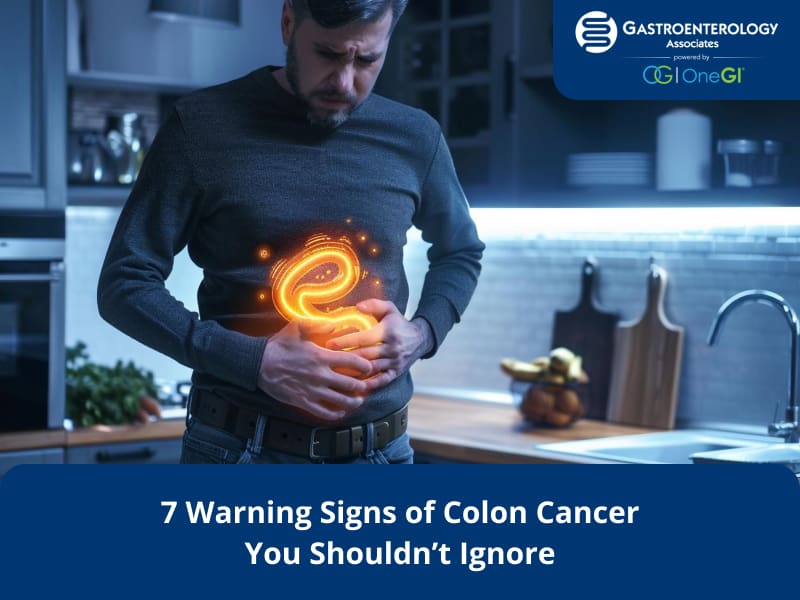
Are you brushing off digestive symptoms because you think they are “just stress” or “something you ate”?
Many people do exactly that. And for colon cancer, that delay in attention can be the difference between catching it early and facing a much harder road. Colon cancer does not usually announce itself loudly. It builds quietly, sometimes for years, before a person feels anything serious. By the time symptoms are hard to ignore, the disease has often already progressed.
The good news is this: colon cancer is one of the most preventable and treatable cancers when caught early. According to the National Cancer Institute, the five-year survival rate for localized colon cancer is 91%. For cancer that has already spread to distant organs, that number drops to just 13%. That gap is not just a statistic. It is a reason to act sooner rather than later.
This article walks you through 7 real warning signs of colon cancer you should never dismiss, plus what the latest colon cancer screening guidelines mean for you.
Table of Contents
How Colon Cancer Develops: A Quick Context
Before we get into the symptoms, it helps to understand what is actually happening inside the colon.
Colon cancer almost always begins as small, non-cancerous growths called polyps on the inner lining of the colon. Over time, some of these polyps can become cancerous. The process is slow, often taking 10 to 15 years from polyp formation to invasive cancer. This slow progression is exactly why colon cancer screening works so well. A colonoscopy can detect and remove polyps before they ever become cancer.
The 5 Stages of Colon Cancer at a Glance
Understanding the stages of colon cancer helps explain why timing matters so much.
| Stage | What It Means | 5-Year Survival Rate |
| Stage 0 | Cancer only in the innermost lining | Near 100% |
| Stage I | Grown into colon wall, not spread | ~91% |
| Stage II | Through the wall, lymph nodes clear | ~82% |
| Stage III | Spread to nearby lymph nodes | ~59% |
| Stage IV | Spread to distant organs (liver, lungs) | ~13% |
The earlier the stage at diagnosis, the better the outcome. This is not debatable. It is the central reason why knowing your symptoms and acting on them matters.
Who Is at Risk? The Numbers Are Shifting
For a long time, colon cancer was considered a disease of older adults. That is no longer the case.
- According to the American Cancer Society, colon cancer rates in adults under 50 have increased by 2.9% per year from 2013 to 2022.
- Among adults under 50, colorectal cancer is now the leading cause of cancer death in men and the second leading cause in women.
- An estimated 152,810 new cases of colorectal cancer were projected in 2024, with over 53,000 deaths.
The colon cancer screening age has been officially lowered to 45 for average-risk adults, per the U.S. Preventive Services Task Force (USPSTF) and the CDC. If you are 45 or older and have not been screened, now is the time.
7 Warning Signs of Colon Cancer You Shouldn’t Ignore
Most people expect cancer to feel dramatic. The reality of colon cancer is that its early signs are easy to brush off as minor digestive issues. The 7 symptoms below are the ones gastroenterologists consistently flag as deserving attention. None of them, on their own, confirms a diagnosis. But any of them, when persistent, is a reason to stop waiting and get checked.
1. Blood in Your Stool
This is the most well-known colon cancer symptom, and it is also the most frequently dismissed. People often attribute rectal bleeding to hemorrhoids or small tears, and sometimes that is true. But it should never be assumed.
Blood in stool from colon cancer can appear in two ways:
- Bright red blood on the toilet paper or in the toilet bowl
- Dark, tarry, or maroon-colored stool, which can signal bleeding higher up in the colon
The clinical reality: Tumors in the colon bleed as they grow. That blood mixes with stool or appears on its surface. A single episode of rectal bleeding with no other explanation is enough reason to speak to a gastroenterologist, not just your primary care physician.
Tip: Never self-diagnose rectal bleeding as hemorrhoids without medical evaluation, especially if it is new, persistent, or accompanied by any other symptoms on this list.
2. Persistent Changes in Bowel Habits
Occasional constipation or loose stools are normal. Persistent changes that last more than a few weeks are not.
Watch for:
- Constipation that does not respond to diet or hydration changes
- Diarrhea that keeps coming back without a clear cause
- Stools that are consistently narrower than usual (pencil-thin stools)
- A frequent urge to have a bowel movement that does not feel relieved after going
A growing tumor inside the colon can physically narrow the passage, which changes the shape, frequency, and consistency of your bowel movements. This is not always painful. That is what makes it easy to overlook.
3. Unexplained Abdominal Pain or Cramping
Among the colon cancer symptoms flagged by the National Cancer Institute’s red-flag study, abdominal pain was one of the four most significant indicators. It had an odds ratio of up to 5.13, meaning people with this symptom were several times more likely to be diagnosed with early-onset colorectal cancer.
The pain often presents as:
- Ongoing cramping or bloating in the lower abdomen
- Gas pain that does not go away after passing gas or having a bowel movement
- A sense of fullness that sets in quickly after eating a small amount
This is different from typical digestive discomfort and may signal underlying digestive health concerns. It does not come and go with meals.
4. Feeling That the Bowel Never Fully Empties
This is medically called “tenesmus,” and it is not a commonly talked-about symptom. Patients describe it as a constant feeling that they need to use the bathroom, even right after they just did. The sensation is that something is still there.
This happens because a tumor near the lower part of the colon or the rectum creates a physical sensation of fullness or blockage. The colon sends signals to the brain saying “something is here,” even if the bowel is actually empty.
Many people live with this for months before they mention it to a doctor. If you experience this, bring it up.
5. Unexplained Weight Loss
Losing weight without trying, without changing your diet or exercise routine, is a symptom your body should never have to offer silently.
In the context of colon cancer, unexplained weight loss happens for several reasons:
- The tumor consumes energy resources
- The immune system’s response to cancer increases metabolic demand
- Reduced appetite from pain, bloating, or nausea
A loss of 10 or more pounds without any lifestyle explanation over a period of weeks is a red flag for multiple cancers, including colon cancer. It rarely gets better on its own.
6. Fatigue and Weakness That Does Not Improve With Rest
Colon cancer causes fatigue in a specific way. It often happens through iron-deficiency anemia, which develops when a tumor in the colon bleeds slowly over time. The blood loss may be so gradual that it is not visible in the stool, but it reduces the red blood cell count enough to make a person feel exhausted, lightheaded, and short of breath.
The National Cancer Institute’s red-flag symptom study identified iron deficiency anemia as one of four key indicators associated with early-onset colorectal cancer.
If a routine blood test shows low iron or low hemoglobin with no other explanation, a gastroenterology evaluation should follow.
Tip: If you have been diagnosed with iron deficiency anemia and your doctor has not mentioned colon cancer screening, ask specifically. Unexplained anemia in adults over 45 warrants a colonoscopy.
7. Nausea or Vomiting Without an Obvious Cause
Less commonly discussed but clinically significant. As a colon tumor grows, it can cause a partial blockage in the colon. This obstruction slows down or disrupts the normal movement of digestive contents, which creates pressure, nausea, and in more advanced cases, vomiting.
This symptom typically appears in the later stages of colon cancer. If it is accompanied by any of the other six symptoms above, it is an urgent reason to seek medical evaluation.
Symptoms vs. Stages: How They Overlap
Not every symptom appears at every stage. Here is a general clinical overview:
| Stage | Common Symptoms |
| Stage 0 – I | Often no symptoms at all |
| Stage II | Blood in stool, mild changes in bowel habits |
| Stage III | Abdominal pain, fatigue, anemia, and weight loss |
| Stage IV | Nausea, obstruction, significant weight loss, pain |
This is why colon cancer screening exists. It is designed to find the cancer at Stage 0 or Stage I, before you ever feel a single symptom.
When Should You Get Screened?
This is where action matters more than awareness.
You may need to begin earlier than 45 if you have:
- A personal or family history of colorectal cancer or colon polyps
- Inflammatory bowel disease (Crohn’s disease or ulcerative colitis)
- A genetic syndrome such as Lynch syndrome or Familial Adenomatous Polyposis (FAP)
- Any of the red-flag symptoms listed in this article, regardless of age
Colon Cancer Screening Options
| Screening Method | Frequency | What It Does |
| Colonoscopy | Every 10 years | Views entire colon, removes polyps in the same session |
| Stool DNA Test (Cologuard) | Every 3 years | Detects DNA changes and blood in stool |
| FIT (Fecal Immunochemical Test) | Every year | Detects blood in stool |
| CT Colonography | Every 5 years | X-ray imaging of the colon |
Colonoscopy is considered the gold standard for colon cancer screening because it both detects and removes polyps in the same procedure. Proper colonoscopy preparation is essential for accurate results. It is typically completed in under 45 minutes and done on an outpatient basis.
For more information on screening options and what to expect, read about Colon Cancer Screening at Gastroenterology Associates.
Key Takeaways
- Colon cancer often causes no symptoms in its early stages, which is why scheduled colon cancer screening is not optional for adults 45 and older.
- The four strongest red-flag symptoms identified by the NCI are: rectal bleeding, abdominal pain, diarrhea, and iron deficiency anemia.
- Understanding the stages of colon cancer makes it clear that early detection dramatically improves survival outcomes.
- The colon cancer screening age is now 45 for average-risk adults per USPSTF and CDC guidelines.
- Colorectal cancer is the second leading cause of cancer death in the U.S., and rates among adults under 50 are actively rising.
- Persistent symptoms lasting more than a few weeks always deserve medical evaluation, not self-diagnosis.
- A colonoscopy can find and remove polyps before they become cancer, making it one of the most powerful preventive tools in medicine.
Conclusion
Colon cancer does not ask for your attention politely. It starts quietly, it grows slowly, and by the time the symptoms feel urgent, the window for the easiest treatment may already be smaller. That is not meant to cause fear. It is meant to give you a factual reason to act now rather than wait.
The signs listed above are not rare. They are the everyday symptoms that millions of Americans quietly live with, attributing them to stress, diet, or age. A bowel habit that changes and stays changed. Fatigue that does not lift. Blood that shows up once and gets ignored. These are worth a conversation with a specialist.
Colon cancer at Stage I is a very treatable disease. Colon cancer at Stage IV is a very different situation. The gap between those two outcomes often comes down to one thing: whether someone acted on a symptom instead of dismissing it.
Frequently Asked Questions
Q1. Can colon cancer develop if I have no family history of it?
Yes. While family history increases risk, approximately 70 to 75 percent of all colorectal cancer cases occur in people with no significant family history of the disease. Lifestyle factors, diet, obesity, and sedentary behavior all contribute to risk independent of genetics. Average-risk adults still need colon cancer screening starting at age 45.
Q2. Is a stool blood test as reliable as a colonoscopy for colon cancer screening?
Stool-based tests like FIT or Cologuard are useful and non-invasive options, but they are indirect. They detect signs such as blood or abnormal DNA in stool samples. A positive result on a stool test must always be followed by a colonoscopy. Colonoscopy remains the only method that both detects and removes polyps in a single procedure, making it the most comprehensive colon cancer screening method available.
Q3. What is the difference between colon cancer and rectal cancer?
Colon cancer develops in the colon, which is the large intestine. Rectal cancer develops in the rectum, the last several inches of the large intestine before the anus. Together, they are called colorectal cancer. They share many of the same symptoms and risk factors, though treatment approaches can differ depending on the location and stage at diagnosis.
Q4. Can younger adults in their 30s develop colon cancer?
Yes, and rates are rising. Early-onset colorectal cancer (before age 50) has been increasing since the mid-1990s. Young adults with colon cancer are more likely to be diagnosed at advanced stages because their symptoms are often attributed to other causes and screening is not routine before age 45. Anyone with persistent red-flag symptoms, regardless of age, should seek evaluation.
Q5. Does a high-fiber diet actually reduce colon cancer risk?
Dietary fiber, particularly from fruits, vegetables, and whole grains, is associated with a reduced risk of colorectal cancer. However, diet alone does not eliminate the need for colon cancer screening. Lifestyle factors can reduce risk, but they do not replace the diagnostic value of a colonoscopy, which physically inspects the colon lining for polyps.
Are You Overdue for a Colon Cancer Screening?
If you are 45 or older, or if any of the symptoms in this article sound familiar, the next step is simple: talk to a gastroenterologist. A screening does not have to wait for symptoms to become unbearable. In fact, the most effective screening happens before symptoms appear at all.
At Gastroenterology Associates, our board-certified specialists serve patients across Northern Virginia from offices in Gainesville, Manassas, and Warrenton. We are here to help you take that first step with clarity and confidence.
Contact us today to schedule your colon cancer screening or to speak with a specialist about your symptoms. Call us at 571-248-0653 or visit doctorgi.com to request an appointment online.
Because the question that matters most is not whether colon cancer could happen to you. It is whether you will catch it early enough to change the outcome.