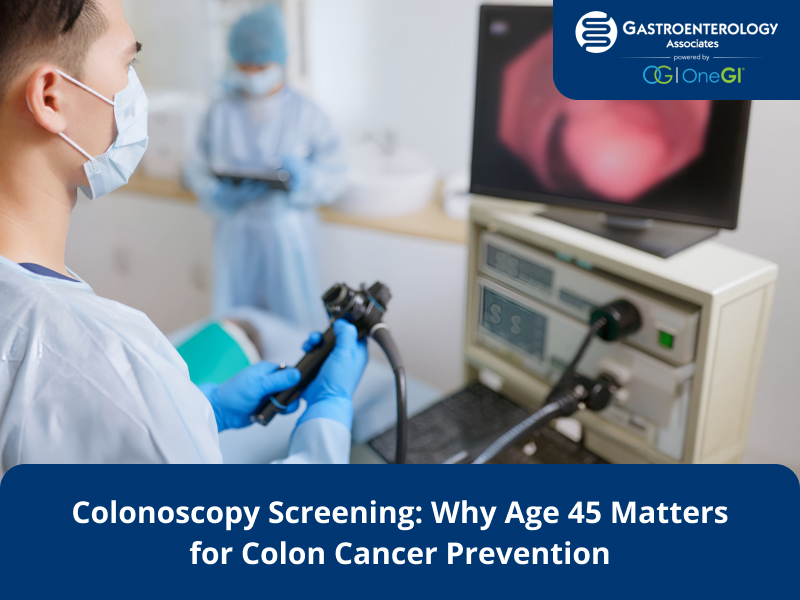
Colonoscopy screening is recommended starting at age 45 because colorectal cancer cases have increased among younger adults, and early screening can detect cancer or precancerous polyps before they become serious. A colonoscopy can help prevent colorectal cancer by identifying and removing polyps before they develop into cancer.
Table of Contents
What You Need to Know About Colonoscopy Screening at Age 45
Many people think colon cancer screening is something they only need to consider later in life or after symptoms appear. But colorectal cancer can develop silently, and some people may feel completely healthy while changes are already occurring inside the colon.
That is why colonoscopy screening at age 45 has become an important preventive health recommendation for many adults. A colonoscopy does more than look for cancer. It can identify and remove precancerous polyps before they have the chance to become cancerous.
Understanding when to begin colon cancer screening, what happens during the procedure, and why early action matters can help you make informed decisions about your digestive health.
The Changing Risk of Colorectal Cancer Among Younger Adults
For many years, colorectal cancer screening was commonly associated with adults aged 50 and older. However, healthcare organizations now recommend that many average-risk adults begin screening at age 45 because colorectal cancer cases have increased among younger adults.
According to the Centers for Disease Control and Prevention (CDC), colorectal cancer remains one of the most common cancers affecting adults in the United States. Regular screening helps find colorectal cancer early and can also identify abnormal growths before they become cancer.
Why You Should Not Wait Until Symptoms Appear
A common misconception is that you only need a colonoscopy if you have symptoms. The reality is that early colorectal cancer and precancerous polyps may not cause noticeable warning signs.
This is why preventive colorectal cancer screening is so important. The goal is not only to find cancer but also to prevent it from developing.
Why Did the Colonoscopy Screening Age Change From 50 to 45?
The American Cancer Society recommends that adults at average risk begin regular colorectal cancer screening at age 45. Screening options may include colonoscopy and other approved tests, depending on individual health needs and preferences. Starting screening earlier helps detect cancer and precancerous polyps sooner, improving opportunities for prevention and early treatment.
Understanding Updated Screening Recommendations
The recommended colonoscopy age changed because healthcare experts recognized the importance of identifying colorectal cancer earlier.
Starting screening at 45 allows doctors to detect:
- Early-stage cancers.
- Precancerous polyps.
- Abnormal changes in the colon lining.
Finding these changes early gives patients more opportunities for prevention and effective treatment.
What Makes Age 45 an Important Health Milestone?
Turning 45 is a good time to discuss preventive healthcare, including:
- Colon cancer screening.
- Family history assessment.
- Personal risk factors.
- Available screening options.
You don’t need digestive symptoms to benefit from a screening conversation.
How Colonoscopy Screening Helps Prevent Colon Cancer
Colonoscopy screening helps prevent colon cancer by allowing doctors to find and remove precancerous polyps before they become cancerous. It also helps detect colorectal cancer at an earlier stage when treatment options are often more effective.
Colonoscopy Can Find and Remove Precancerous Polyps
One of the biggest benefits of colonoscopy screening is that it can help prevent cancer before it starts.
During a colonoscopy, a gastroenterologist examines the inside of the colon for abnormal growths called polyps. Some polyps can slowly develop into cancer over time.
If a doctor finds a concerning polyp, they can often remove it during the same procedure.
Early Detection Can Improve Treatment Outcomes
If colorectal cancer is found through screening, it is often identified at an earlier stage than cancers discovered after symptoms appear.
Early detection may provide more treatment options and can improve the chances of successful management.
Quick Facts About Colonoscopy Screening
- Many adults should begin colorectal cancer screening at age 45.
- Colonoscopy can detect and remove precancerous polyps.
- Screening is recommended even when you feel healthy.
- Your screening schedule depends on your personal health history and risk factors.
Colonoscopy vs Other Colorectal Cancer Screening Options
Several screening methods can detect colorectal cancer. The best option depends on your age, health history, risk factors, personal preferences, and discussion with your healthcare provider.
While some tests can detect possible signs of cancer, colonoscopy screening has a unique advantage because it allows doctors to find and remove precancerous polyps during the same procedure.
Comparison of Common Colorectal Cancer Screening Tests
| Screening Test | How It Works | Main Benefits | Limitations |
|---|---|---|---|
| Colonoscopy | A flexible camera examines the entire colon and rectum. Doctors can remove polyps during the procedure. | Can detect cancer, find precancerous polyps, and prevent cancer by removing abnormal growths. | Requires bowel preparation and sedation. Patients need recovery time after the procedure. |
| FIT (Fecal Immunochemical Test) | A stool test that detects hidden blood in stool, which may indicate colorectal cancer. | Convenient, non-invasive, and can be completed at home. | Must be repeated regularly and cannot remove polyps or prevent cancer from developing. |
| Stool DNA Test (such as Cologuard) | Examines stool samples for DNA changes and blood linked to colorectal cancer. | Non-invasive and can be done at home. | Positive results require follow-up colonoscopy. It does not remove polyps. |
| CT Colonography (Virtual Colonoscopy) | Uses CT imaging to create pictures of the colon. | Less invasive than traditional colonoscopy and does not require inserting a camera into the colon. | If polyps are found, a traditional colonoscopy is still needed to remove them. |
| Flexible Sigmoidoscopy | Uses a flexible scope to examine the lower colon. | Can detect some cancers and polyps in the lower colon. | Does not examine the entire colon and may miss abnormalities in other areas. |
What Happens During a Screening Colonoscopy?
Many people delay scheduling a colonoscopy because they are unsure what to expect. Understanding the process can make the experience easier.
For a detailed explanation, read our guide on colonoscopy screening.
Preparing for Your Colonoscopy
Preparation helps ensure your doctor has a clear view of the colon.
Preparation usually includes:
- Following specific dietary instructions.
- Taking prescribed bowel preparation medication.
- Discussing current medications with your healthcare provider.
Although preparation often worries patients most, following instructions carefully helps improve the quality of the examination.
During the Colonoscopy Procedure
During a colonoscopy:
- A flexible tube with a small camera is gently guided through the colon.
- The doctor examines the colon lining for abnormalities.
- The doctor may remove polyps or evaluate suspicious areas.
Patients typically receive sedation to stay comfortable during the procedure.
After the Procedure
Most people can return home the same day after recovery from sedation.
Your healthcare provider will discuss:
- Findings from the procedure.
- Whether polyps were removed.
- When your next screening should occur.
How Often Should You Get a Colonoscopy After Age 45?
Colonoscopy screening frequency depends on your risk level, previous colonoscopy results, and whether any polyps or abnormalities were found. Some average-risk adults may have longer intervals between screenings, while people with certain findings may need follow-up sooner.
Your gastroenterologist will recommend a screening schedule based on your individual health history.
Colonoscopy Screening Intervals Based on Risk Category
| Risk Category | Who It Applies To | Typical Screening Approach |
|---|---|---|
| Average Risk | Adults starting screening around age 45 with no personal or family history of colorectal cancer | Screening interval depends on the screening method and colonoscopy findings |
| Increased Risk | People with a family history of colorectal cancer, previous polyps, or certain medical conditions | May require earlier screening or shorter follow-up intervals |
| High Risk | People with inherited conditions or significant medical risk factors | Often requires specialized screening plans and closer monitoring |
What Happens If Your Colonoscopy Results Are Abnormal?
An abnormal colonoscopy result does not always mean you have cancer. Many findings, such as polyps, are common and can often be treated during the procedure.
If Polyps Are Found During Colonoscopy
During a colonoscopy, your doctor may find and remove polyps. They examine these growths to determine their type and whether they contain abnormal or precancerous changes.
Your follow-up plan may depend on:
- Number of polyps found
- Size and type of polyps
- Laboratory results
- Your personal risk factors
If Additional Monitoring Is Needed
Some patients may need a repeat colonoscopy sooner than the standard screening interval. This allows doctors to monitor changes and reduce future colorectal cancer risk.
Your gastroenterologist will explain:
- When your next colonoscopy should occur
- Whether additional testing is needed
- Steps you can take to support colon health
Who May Need Colon Cancer Screening Before Age 45?
Although age 45 is the general starting point for many average-risk adults, some people may need earlier screening.
Family History of Colorectal Cancer
Your doctor may recommend earlier screening if you have:
- A parent, sibling, or child with colorectal cancer.
- A family history of advanced polyps.
Always share your family medical history during healthcare visits.
Medical Conditions That Increase Risk
Certain conditions may increase colorectal cancer risk, including:
- Inflammatory bowel disease.
- Previous colon polyps.
- Certain inherited conditions.
Your gastroenterologist can help determine the most appropriate screening plan.
Symptoms That Should Not Be Ignored
Talk with a healthcare provider if you experience:
- Blood in your stool.
- Persistent changes in bowel habits.
- Unexplained weight loss.
- Ongoing abdominal discomfort.
- Changes that do not resolve.
Common Concerns About Your First Colonoscopy
Many people feel nervous about their first colonoscopy due to concerns about preparation, discomfort, or the procedure itself. Understanding what to expect can help reduce anxiety and make the screening experience more comfortable and manageable.
Many patients delay their first colonoscopy because they are concerned about preparation. In practice, understanding the process beforehand often helps patients feel more comfortable.
Is Colonoscopy Painful?
Many patients worry that a colonoscopy will be uncomfortable. However, sedation and modern techniques help make the procedure comfortable for most people.
The experience varies from person to person, but many patients report that the preparation is more noticeable than the procedure itself.
Is Colonoscopy Preparation Difficult?
Preparation is necessary because the colon must be clean for the doctor to clearly identify abnormalities.
Helpful tips include:
- Follow preparation instructions exactly.
- Stay hydrated as recommended.
- Ask questions if you are unsure about any step.
Do Healthy People Really Need Screening?
Yes. Screening is designed for people without symptoms.
Screening aims to identify problems early and prevent serious disease before it affects your health.
Why Choose Gastroenterology Associates for Colonoscopy Screening?
Choosing an experienced gastroenterology team can make the screening process easier and more personalized.
Gastroenterology Associates helps patients protect their digestive health through preventive care, education, and expert evaluation.
A gastroenterologist can help you understand:
- When screening should begin.
- Which screening option is appropriate.
- How your personal health history affects your risk.
Taking the first step toward screening can provide peace of mind and help protect your long-term health.
Conclusion:
Age 45 is an important milestone for colorectal cancer prevention. Even if you feel healthy, screening can help identify problems before they become serious.
Colonoscopy screening is more than a cancer test. It is a preventive tool that can detect and remove precancerous polyps, helping reduce future risk.
If you are 45 or older or have risk factors for colorectal cancer, talk with Gastroenterology Associates about whether colonoscopy screening is right for you.
Schedule an appointment with Gastroenterology Associates to discuss your colon cancer screening options and take an important step toward protecting your digestive health.
Frequently Asked Questions
How long does a colonoscopy appointment usually take?
A colonoscopy usually takes 30–60 minutes, but patients should plan extra time for preparation and recovery after sedation.
What should I eat before a colonoscopy?
Before a colonoscopy, patients typically follow specific diet instructions from their doctor, which may include avoiding certain high-fiber foods and following a clear liquid diet before the procedure.
Can I drive myself home after a colonoscopy?
No. Because sedation is commonly used during colonoscopy, patients usually need someone to drive them home.
How do I know when it is time for my next colonoscopy?
Your next screening date depends on your results, the number and type of polyps found, and your personal risk factors. Your gastroenterologist will recommend the appropriate follow-up schedule.
Disclaimer
The information provided in this article is for educational and informational purposes only and should not be considered medical advice. Every person’s health needs are different, and colonoscopy screening recommendations may vary based on age, medical history, family history, symptoms, and risk factors. Always consult a qualified healthcare provider or gastroenterologist to determine the appropriate screening plan for your individual needs.