
Reviewed by Dr. Brian Park
Many people experience digestive symptoms like frequent heartburn, stomach discomfort, nausea, bloating, or difficulty swallowing and assume they are dealing with ordinary indigestion. While occasional symptoms are common, ongoing or worsening digestive problems may indicate an underlying condition that needs closer evaluation.
One of the most effective tools a gastroenterologist uses to examine the upper digestive system is an upper endoscopy.
An upper endoscopy procedure allows a GI doctor to directly view the lining of the esophagus, stomach, and the first part of the small intestine. It can help identify the cause of unexplained symptoms, detect digestive conditions early, and guide the right treatment plan.
If your doctor has recommended an upper endoscopy, you may have questions:
- What does an upper endoscopy detect?
- Why do I need this procedure?
- Is an upper endoscopy painful?
- What should I expect before and after the test?
This guide explains everything you need to know about upper endoscopy, including why it is recommended, what conditions it can detect, and how the procedure works.
Table of Contents
What Is an Upper Endoscopy?
An upper endoscopy, medically known as an esophagogastroduodenoscopy (EGD), is a procedure that allows a gastroenterologist to examine the upper portion of the digestive tract.
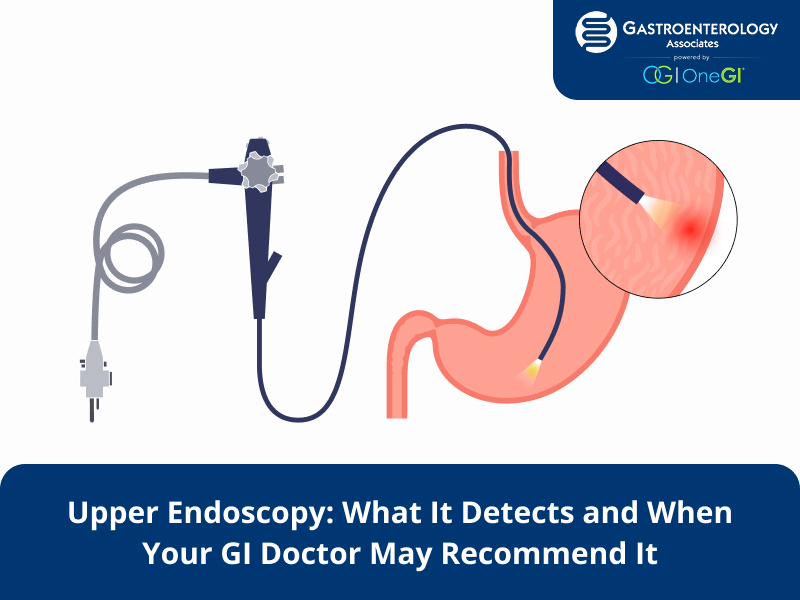
During the procedure, the doctor uses a thin, flexible tube called an endoscope. The endoscope contains a small camera and light that provide a clear view of the digestive tract.
An upper endoscopy examines:
- Esophagus: The tube that carries food from the mouth to the stomach
- Stomach: The organ responsible for breaking down food
- Duodenum: The first section of the small intestine
Unlike some imaging tests, an upper endoscopy allows doctors to see the digestive tract lining directly. If needed, the doctor can also collect small tissue samples called biopsies for further testing.
What Does an Upper Endoscopy Detect?
An upper endoscopy helps your GI doctor examine the upper digestive tract to identify the cause of persistent symptoms and diagnose various conditions. It can detect problems such as acid reflux-related damage, ulcers, inflammation, bleeding, infections, and abnormal tissue changes in the esophagus, stomach, and duodenum. The procedure also allows doctors to collect tissue samples (biopsies) when needed for further evaluation.
-
Gastroesophageal Reflux Disease (GERD) Complications
Acid reflux occurs when stomach acid flows back into the esophagus. Occasional reflux is common, but repeated exposure to stomach acid can damage the esophageal lining.
An upper endoscopy may detect:
- Esophagitis (inflammation of the esophagus)
- Esophageal narrowing or strictures
- Barrett’s esophagus, a condition involving changes in the esophageal lining
The procedure helps doctors determine whether reflux symptoms have caused physical changes or complications.
-
Stomach and Duodenal Ulcers
Ulcers are open sores that develop in the lining of the stomach or small intestine.
An upper endoscopy procedure can identify:
- Stomach ulcers
- Duodenal ulcers
- Signs of irritation or inflammation
- Areas of bleeding
Doctors may collect a biopsy during the procedure to check for H. pylori infection, a common cause of ulcers.
-
Internal Bleeding in the Upper Digestive Tract
Sometimes digestive bleeding is not obvious. Symptoms may include:
- Black stools
- Vomiting blood
- Unexplained anemia
- Weakness or fatigue
An upper endoscopy can help locate the source of bleeding and, in some cases, allow doctors to treat the bleeding during the same procedure.
-
Difficulty Swallowing (Dysphagia)
Trouble swallowing may occur because of problems affecting the esophagus.
An upper endoscopy can help identify:
- Narrowing of the esophagus
- Inflammation
- Structural abnormalities
- Abnormal tissue growths
Finding the cause of swallowing problems allows doctors to recommend appropriate treatment.
-
Gastritis and Other Inflammatory Conditions
Inflammation of the stomach lining, known as gastritis, may develop due to infections, medications, or other factors.
An upper endoscopy can help evaluate:
- Stomach lining irritation
- Chronic inflammation
- Infection-related changes
- Medication-related damage
-
Polyps, Abnormal Tissue, or Suspicious Areas
During an upper endoscopy, doctors may notice unusual areas in the digestive tract.
These may include:
- Polyps
- Lesions
- Abnormal tissue changes
- Growths requiring further evaluation
If necessary, a biopsy can be performed to examine the tissue under a microscope.
 When Will a GI Doctor Recommend an Upper Endoscopy?
 When Will a GI Doctor Recommend an Upper Endoscopy?
A GI doctor may recommend an upper endoscopy when digestive symptoms require a closer evaluation or when other tests do not provide enough answers. The procedure is commonly suggested for persistent heartburn, ongoing stomach pain, difficulty swallowing, unexplained nausea, vomiting, weight loss, or signs of digestive bleeding. An upper endoscopy helps your gastroenterologist identify the cause of symptoms and create an appropriate treatment plan. Common reasons include:
-
Persistent Heartburn or Acid Reflux
If heartburn continues despite lifestyle changes or medications, your doctor may recommend an upper endoscopy to check for damage caused by acid reflux.
-
Long-Lasting Stomach Pain
An upper endoscopy may help evaluate:
- Persistent upper abdominal pain
- Chronic indigestion
- Unexplained discomfort after eating
- Recurring nausea
-
Unexplained Weight Loss
Unexpected weight loss combined with digestive symptoms may require further investigation. An upper endoscopy can help doctors look for possible causes affecting the upper digestive tract.
-
Chronic Nausea or Vomiting
When nausea or vomiting persists without an obvious cause, an upper endoscopy may help identify problems in the stomach or upper intestine.
-
Abnormal Test Results
Doctors may recommend an upper endoscopy if other tests suggest a possible digestive condition that requires direct examination.
How Is an Upper Endoscopy Procedure Performed?
An upper endoscopy procedure is performed using a thin, flexible tube called an endoscope with a small camera attached to it. After providing medication to help you relax and stay comfortable, a gastroenterologist gently guides the endoscope through the mouth to examine the esophagus, stomach, and duodenum.
The doctor checks for abnormalities and may collect tissue samples (biopsies) if needed. The procedure typically takes about 15 to 30 minutes, and most patients can return home the same day. Many patients feel nervous before their first procedure. Understanding each step can make the experience more comfortable.
Before the Procedure
Your healthcare provider will give preparation instructions, which may include:
- Avoiding food and drinks before the procedure
- Adjusting certain medications if needed
- Discussing your medical history and allergies
A clean, empty stomach helps the doctor get a clearer view.
During the Procedure
An upper endoscopy usually follows these steps:
- You receive medication to help you relax and remain comfortable.
- You lie on your side during the procedure.
- The doctor gently guides the endoscope through the mouth.
- The camera allows the doctor to examine the digestive tract.
- Biopsies may be taken if needed.
The procedure itself commonly takes about 15 to 30 minutes.
After the Procedure
After an upper endoscopy:
- You may have mild throat soreness.
- You may feel temporary bloating.
- You will rest until the effects of sedation wear off.
- You may need someone to drive you home.
Most patients return to their normal routine soon after recovery.
How Should You Prepare for an Upper Endoscopy?
Preparing for an upper endoscopy involves following your doctor’s instructions to ensure a safe and accurate procedure. Most patients need to avoid food and drinks for a specific period before the test, review their medications with their healthcare provider, and share any medical conditions or allergies.
Proper preparation helps your GI doctor get a clear view of the digestive tract and improves the effectiveness of the procedure. Following preparation instructions is important for safety and accurate results.
Follow Fasting Guidelines
Your stomach must be empty before the procedure so your doctor can properly examine the lining.
Review Your Medications
Tell your doctor about:
- Blood thinners
- Diabetes medications
- Supplements
- Prescription medications
Share Your Health History
Inform your GI doctor about:
- Previous digestive procedures
- Allergies
- Existing health conditions
Quick Facts About Upper Endoscopy
- Upper endoscopy examines the esophagus, stomach, and duodenum.
- Doctors can collect tissue samples during the procedure.
- The procedure helps investigate unexplained digestive symptoms.
- Most upper endoscopy procedures are completed within 30 minutes.
- Preparation instructions improve procedure safety and accuracy.
Key Takeaways
- An upper endoscopy provides a direct view of the upper digestive tract.
- It can detect ulcers, inflammation, reflux-related damage, bleeding sources, and abnormal tissue changes.
- GI doctors may recommend the procedure for persistent digestive symptoms.
- The procedure is generally quick and performed with patient comfort measures.
- Early evaluation can help identify digestive conditions and guide treatment.
Conclusion
An upper endoscopy is a valuable diagnostic procedure that helps gastroenterologists understand problems affecting the upper digestive system. It can detect conditions such as ulcers, inflammation, reflux complications, bleeding sources, and abnormal tissue changes.
If you are experiencing persistent heartburn, stomach pain, difficulty swallowing, nausea, or unexplained digestive symptoms, an evaluation with a GI specialist can help determine the right next step.
A timely diagnosis can make it easier to manage digestive conditions and protect your long-term health.
Wondering If an Upper Endoscopy Is Right for You?
Are you experiencing ongoing digestive symptoms or wondering whether an upper endoscopy may be right for you? Contact Gastroenterology Associates to discuss your concerns and schedule an evaluation with a GI specialist.
Frequently Asked Questions About Upper Endoscopy
-
Can an upper endoscopy help explain unexplained anemia?
Yes. An upper endoscopy may help identify possible causes of unexplained anemia, especially when it is related to slow bleeding in the upper digestive tract. Conditions such as ulcers, inflammation, or abnormal blood vessels may contribute to blood loss and can sometimes be detected during the procedure.
-
Can an upper endoscopy be used to treat problems, or is it only diagnostic?
An upper endoscopy can be both diagnostic and therapeutic. In addition to identifying digestive problems, doctors may use the procedure to perform certain treatments, such as stopping minor bleeding, removing some abnormal growths, or widening narrowed areas of the esophagus.
-
What factors determine whether someone needs an upper endoscopy?
The decision to recommend an upper endoscopy depends on several factors, including the type and duration of symptoms, age, medical history, risk factors, and findings from previous tests. Your gastroenterologist will determine whether the procedure is appropriate based on your individual situation.
-
Can lifestyle changes prevent the need for an upper endoscopy?
Lifestyle changes may help manage some digestive symptoms, such as reflux or indigestion, but they cannot prevent every condition that requires evaluation. If symptoms persist despite dietary or lifestyle adjustments, your doctor may recommend an upper endoscopy to identify the underlying cause.
-
What happens if a biopsy is taken during an upper endoscopy?
If your doctor takes a biopsy during an upper endoscopy, the tissue sample is sent to a laboratory for detailed examination. A biopsy can help identify infections, inflammation, precancerous changes, or other conditions that may not be visible through the camera alone.